
By Jotham Emenyonu, 08034223515
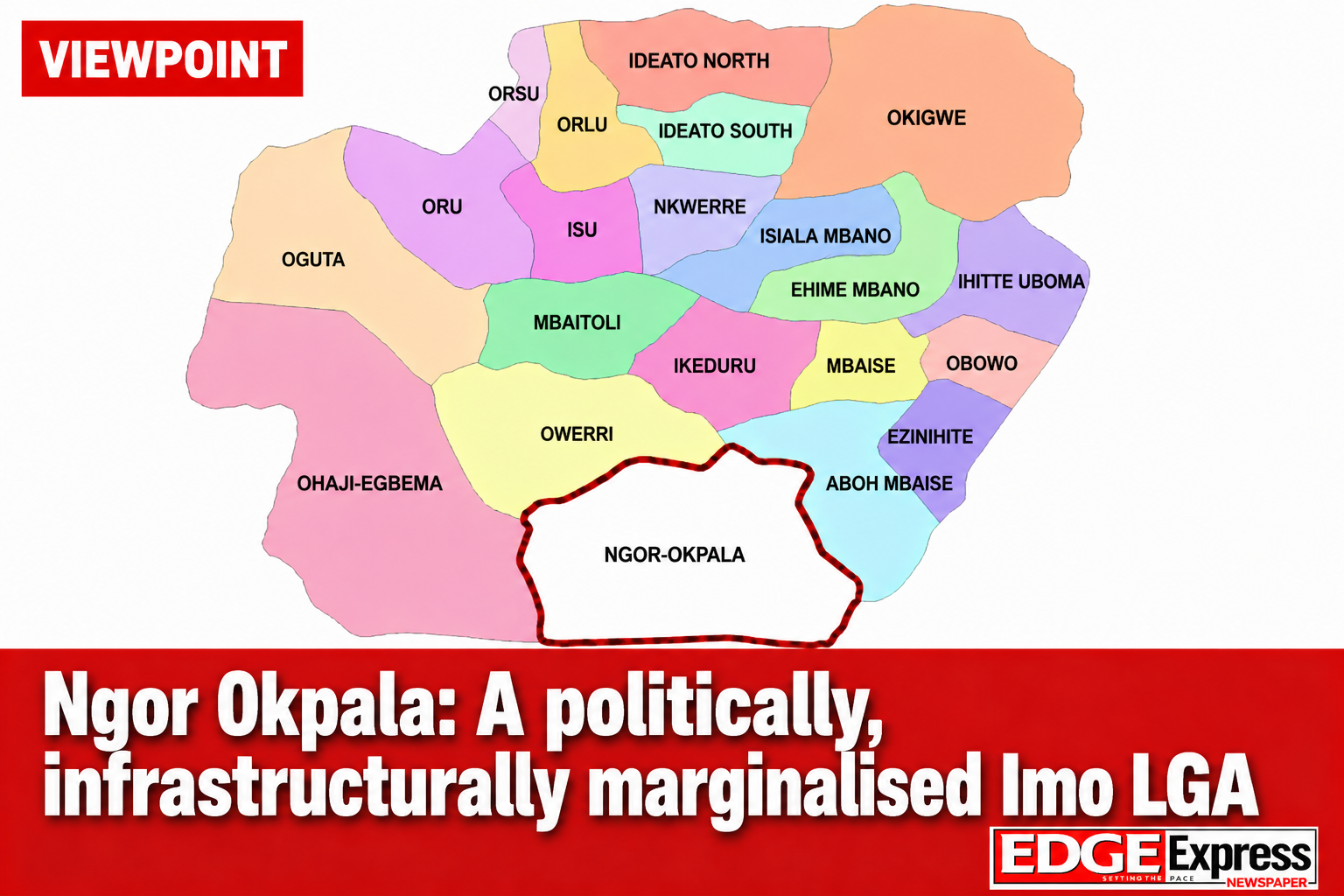
For decades, Ngor Okpala Local Government Area of Imo State has remained one of the most politically overlooked and infrastructurally neglected regions in the state. Despite its strategic importance, large population, and undeniable contributions to the socio-economic and political fabric of Imo, the LGA continues to operate on the margins of power and development. This lingering sense of exclusion has fueled growing frustration among its people—an agitation that is no longer whispered in private gatherings but increasingly voiced in public discourse.
Historically, Ngor Okpala has suffered a glaring absence in the highest levels of political representation in Imo State. Since the creation of the state in 1976, the LGA has neither produced a governor nor a senator. In a political environment where representation often translates to development, access, and influence, this absence has had far-reaching consequences. While other LGAs and zones have rotated key positions among themselves, Ngor Okpala has remained largely sidelined—watching from a distance as decisions that affect its future are made without its direct input.
This long-standing political marginalisation has, in many ways, reinforced a cycle of neglect. Without strong representation at the top, the LGA has struggled to attract the kind of attention and investment that drives infrastructure and human capital development. The result is visible across its communities—perhaps most painfully in the condition of its road network.
A drive through Ngor Okpala tells a troubling story. Major roads that connect communities and serve as economic lifelines have deteriorated into near impassable paths. The Imerienwe axis, Umuneke roads, and several other critical routes have become symbols of abandonment. During the rainy season, these roads worsen into muddy trenches, cutting off communities, disrupting economic activities, and exposing residents to avoidable risks. Farmers find it difficult to transport produce to markets, traders incur higher transportation costs, and commuters endure daily hardship—all because basic infrastructure has failed.
Ironically, one of the most prominent assets located within Ngor Okpala is the *Sam Mbakwe International Cargo Airport*—a facility of strategic importance not just to the LGA but to the entire South-East region. Yet, for many residents, the airport remains almost the only tangible project they can point to as evidence of government presence. Beyond this, the surrounding communities continue to grapple with poor road access, limited infrastructure, and minimal direct benefits from hosting such a critical national asset. It is a paradox that a locality hosting an international gateway still struggles with basic connectivity and development.
This situation stands in sharp contrast to the “infrastructure revolution” narrative often associated with the current administration. For many residents of Ngor Okpala, that narrative feels distant and disconnected from their lived reality. It is not that they are unaware of developments in other parts of the state; rather, they question why their own communities have been consistently left behind.
Part of the challenge also lies within. Ngor Okpala’s political elite, over the years, have not always demonstrated the boldness required to advocate effectively for their people. Too often, those entrusted with leadership positions appear reluctant to speak truth to power or to confront sitting governors with the depth of dissatisfaction among their constituents. Whether due to political loyalty, personal ambition, or fear of alienation, this silence has come at a cost.

Leadership, at any level, demands courage—the courage to represent the people honestly, even when it is inconvenient. The people of Ngor Okpala deserve leaders who will not merely occupy positions but will actively push for equitable treatment and development. They need voices that will articulate their concerns clearly and persistently, ensuring that their plight is neither ignored nor downplayed.
Yet, it would be a mistake to underestimate Ngor Okpala politically. The LGA is one of the largest in Imo State, both in landmass and population. Its communities are vibrant, politically aware, and increasingly assertive. In electoral terms, Ngor Okpala represents a significant voting bloc that can influence outcomes, especially in tightly contested elections. Any serious political calculation in Imo State must take into account the weight and potential of this LGA.
Beyond numbers, Ngor Okpala plays critical roles in agriculture and local commerce. Its fertile lands support farming activities that contribute to food supply within and beyond the state. Its people are industrious, resilient, and deeply connected to their communities. These are not attributes of a peripheral region—they are the strengths of a central stakeholder in the state’s development.
This is why the current moment presents an opportunity—particularly for Hope Uzodimma. As the sitting governor, he is uniquely positioned to alter the narrative and address the long-standing grievances of Ngor Okpala. Doing so would not only bring relief to the people but also send a strong message about inclusive governance.
Correcting years of neglect does not require grand gestures alone; it begins with deliberate and visible actions. Prioritising the rehabilitation of key roads in Ngor Okpala would be a powerful starting point. Infrastructure is not just about physical development—it is about restoring dignity, enabling economic activity, and reconnecting communities. When roads are fixed, businesses thrive, mobility improves, and hope is rekindled.
Beyond infrastructure, there is also a need for greater political inclusion. Appointments, projects, and policy considerations should reflect a genuine commitment to equity. Ngor Okpala should not be treated as an afterthought but as a critical partner in the state’s progress. Engaging local stakeholders, listening to community leaders, and responding to their concerns would go a long way in rebuilding trust.
Importantly, addressing the concerns of Ngor Okpala is not merely a political obligation—it is a moral one. Governance must be seen to serve all, not just a few. When any part of the state feels excluded, it weakens the collective strength of the whole. Inclusion, therefore, is not optional; it is essential for sustainable development.
As Imo State continues to navigate its path toward growth and stability, the voices from Ngor Okpala must not be ignored. Their demands are neither unreasonable nor excessive—they are rooted in a desire for fairness, representation, and basic development. They seek roads that are motorable, leaders who will speak for them, and a government that recognises their worth.
The time has come to move beyond rhetoric and address reality. Ngor Okpala can no longer remain on the fringes of Imo’s development story. It must be brought to the centre, where it rightfully belongs.
Governor Uzodimma has an opportunity to rewrite this narrative—to transform a history of marginalisation into a story of inclusion and progress. If he rises to this challenge, he will not only win the confidence of the people of Ngor Okpala but also strengthen the foundation of unity and equity across Imo State.
For the people of Ngor Okpala, hope remains—but it is a hope that must now be matched with action.