

By Jotham Emenyonu ( 08034223515)
The prospect of local government elections in Imo State has once again become a subject of discussion across political circles. Although reports and speculation about a possible election continue to circulate, it is important to note that, as of now, the anticipated poll remains a matter of speculation. In particular, suggestions that the election may hold in September remain speculative, as the Imo State Independent Electoral Commission (ISIEC) has not officially announced any election date or timetable.
Even so, conversations surrounding the possibility of the polls continue to generate varying reactions among political stakeholders and members of the public.
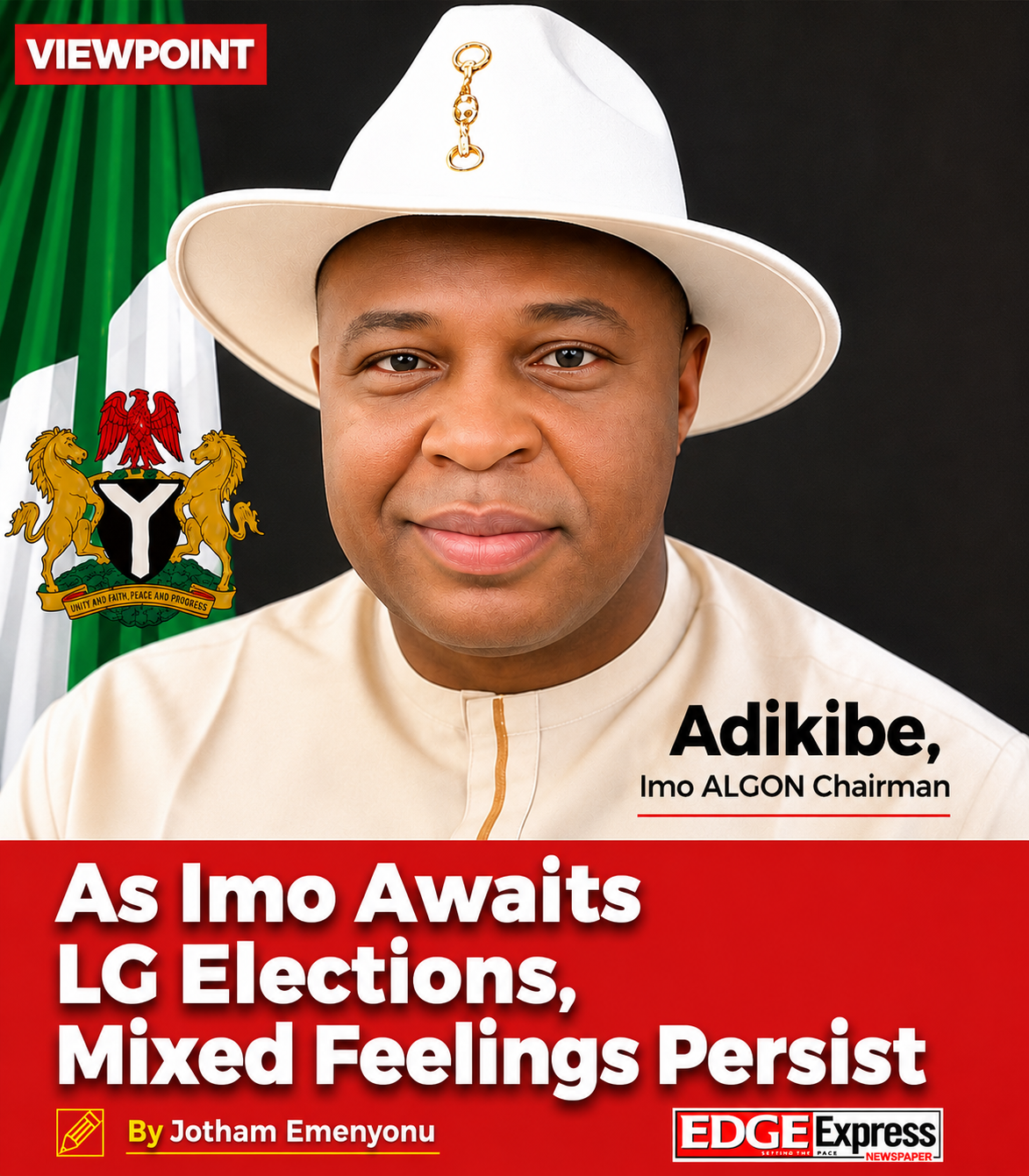
One important distinction that deserves emphasis is the difference between the official position of the Association of Local Governments of Nigeria (ALGON), Imo State chapter, and the personal expectations that individual political office holders may have.
From all publicly available indications, ALGON, as a body, remains united and supportive of the policies and decisions of the Imo State Government. The association has not publicly opposed the conduct of local government elections or any directive that may be issued by the government concerning the electoral process.
However, the fact that ALGON speaks with one official voice should not necessarily be interpreted to mean that every individual office holder shares exactly the same personal expectations or aspirations. Like every organisation, an association may adopt a common official position while some of its members privately hold different opinions on matters that directly affect them.
It is therefore conceivable that some local government chairmen may personally believe that elected local government officials should serve a four-year tenure rather than two years. Others may also feel that, based on their own assessment of their stewardship in office, they would welcome the opportunity to seek another term whenever elections are eventually conducted.
It is equally possible that some chairmen may be privately reflecting on their political future. Those who believe they may not be re-nominated or re-elected could naturally view any forthcoming election as marking the end of their current tenure. Such personal expectations or concerns, should not be mistaken for the official position of ALGON or that of all local government chairmen in Imo State. Likewise, media reports or commentary exploring such possibilities should not automatically be interpreted as an attack on ALGON or its leadership.
This distinction is important because unity within an organisation does not necessarily require absolute uniformity of private opinion. In politics, as in every human endeavour, individuals may have personal hopes, reservations or expectations while continuing to respect and abide by the collective decisions or official position of the body to which they belong.
As with most elections, expectations differ. While some citizens believe a fresh electoral process would deepen grassroots democracy and provide an opportunity for renewed leadership, others prefer to await official confirmation before drawing conclusions about what lies ahead.

Such differing perspectives are neither unusual nor unique to Imo State. Elections often inspire hope, uncertainty, anticipation and debate, particularly when they involve leadership at the grassroots level, where government decisions directly affect local communities.
Public discussion surrounding the anticipated elections should therefore be viewed as part of the democratic process rather than evidence of division or conflict. Democracy thrives when citizens are free to express differing opinions peacefully and responsibly.
The media also has an important role to play in this process. Matters relating to elections, governance and public administration are issues of legitimate public interest, and responsible journalism exists to inform the public, ask questions and encourage accountability. While every individual or institution has the right to challenge reports they believe are inaccurate and to seek corrections where necessary, it is in the interest of democracy that such concerns are addressed through engagement, clarification and lawful processes rather than actions that may discourage responsible journalism on matters of public concern.
Good leaders often recognise that credible investigative journalism can serve as an important source of feedback. Even where a report is later clarified, corrected or disputed, responsible investigative reporting can draw attention to perceptions, concerns or emerging issues worthy of consideration. Constructive engagement with such reports can contribute to better governance, strengthen public confidence and promote transparency.
It is equally important for public institutions and associations to maintain open channels of communication with journalists. When official spokespersons or leaders are unavailable or inaccessible to respond to legitimate media enquiries, it can create room for speculation and increased reliance on unofficial sources. Timely, factual and transparent responses help ensure that public discourse is guided by verified information rather than conjecture.