

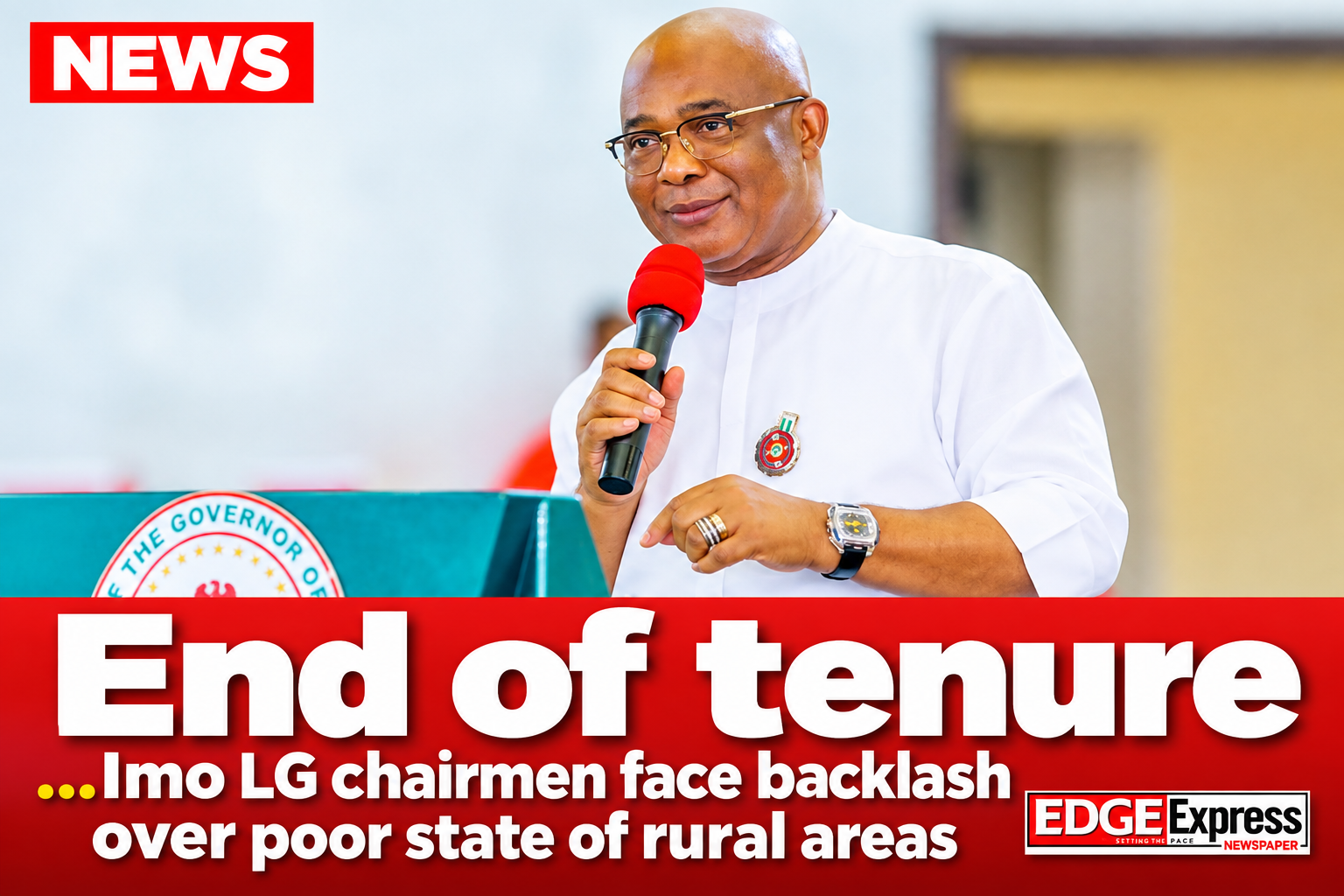
As the tenure of the elected chairmen of the 27 local government areas of Imo State comes to an end, criticism is mounting across parts of the state over what some residents describe as inadequate visible development at the grassroots.
The chairmen emerged from the September 21, 2024 local government election conducted by the Imo State Independent Electoral Commission (ISIEC). The All Progressives Congress (APC) won all 27 chairmanship seats and the 305 councillorship positions contested across the state.
Two years after the election, attention is increasingly shifting from the circumstances of their emergence to what each council administration has delivered to the communities under its jurisdiction.
Across a number of rural communities, residents point to the poor condition of access roads, dilapidated public school buildings, inadequate primary healthcare facilities, poor sanitation and other basic infrastructure challenges as reasons for questioning the impact of the councils.
Of particular concern is the condition of rural roads, which remain critical to the daily lives and economic activities of residents.
In several communities, residents complain that some access and link roads have deteriorated badly, with movement becoming particularly difficult during the rainy season. The situation affects farmers seeking to move produce to markets, traders, schoolchildren, commercial transport operators and other road users.
For residents who expected the return of elected local government administration to bring governance closer to their communities, the continued poor condition of some rural roads has become a major source of dissatisfaction.

The state of some public schools in rural communities has also attracted concern. Residents have questioned why basic facilities such as classroom blocks, desks, toilets and other learning infrastructure in some areas have not received greater attention from their councils.
Primary healthcare, sanitation, markets and other community infrastructure have similarly become part of the growing conversation over the performance of the outgoing administrations.
For critics, the situation raises questions about the effectiveness of local governments as the tier of government closest to the people.
They argue that while major road construction and other capital-intensive projects may sometimes require the intervention of the state or Federal Government, local councils are expected to make meaningful contributions through the grading and maintenance of rural roads and other basic interventions capable of improving everyday life in their communities.
The criticism, however, does not necessarily mean that none of the 27 councils executed projects or programmes during the period under review.
Indeed, there have been reported instances of grassroots interventions by council officials, including educational support and the grading of rural link roads. A comprehensive council-by-council assessment would therefore be required to establish precisely what each chairman delivered, where the projects were located and how much was spent.
The approaching end of the tenure has consequently intensified calls for the outgoing chairmen to publicly present detailed scorecards of their stewardship.
Residents and other stakeholders want the councils to provide verifiable accounts of projects executed, their locations and costs, as well as programmes undertaken in education, healthcare, sanitation, roads, markets, youth and women empowerment and other areas during their period in office.
Such accountability has become particularly important amid continuing national debate over local government autonomy and the financial relationship between councils and state governments.
For many rural dwellers, however, the ultimate assessment of local government administration is less about political declarations and more about tangible improvements in their immediate environment.
The roads they travel, the schools their children attend, the health centres they depend on, the markets where they conduct their businesses and the basic services available within their communities remain some of the most practical measures by which grassroots governance is judged.
As the curtain falls on the two-year tenure of the elected councils, the growing criticism has therefore brought one fundamental question to the fore: What lasting and visible development can each of the 27 outgoing local government chairmen point to in the communities under his watch?